


Achyranthemum recurvatum
Introduction
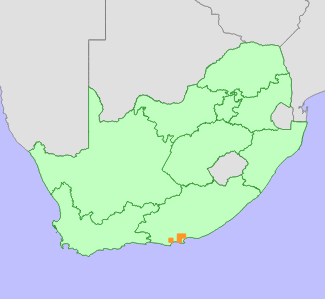
Achyranthemum recurvatum is a small, shrubby daisy with pretty pink flowerheads and attractive silvery foliage. This low shrub is endemic to a small area in the Eastern Cape. Unfortunately, its habitat is under threat and this beautiful little everlasting is fast losing the only places where it can exist naturally.
Description
Description
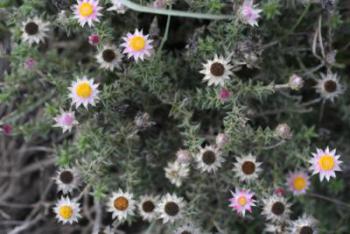
The plant is a low, well-branched shrub that forms small bushes in scrub on calcareous ridges. Stems are robust and about 120-300 mm high. The leaves are narrow and green and are curved backwards and covered in silky hairs, giving them a silvery appearance.

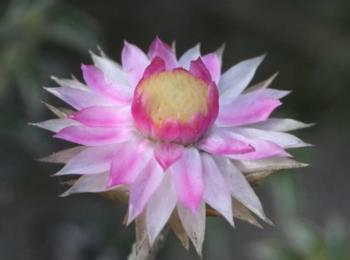
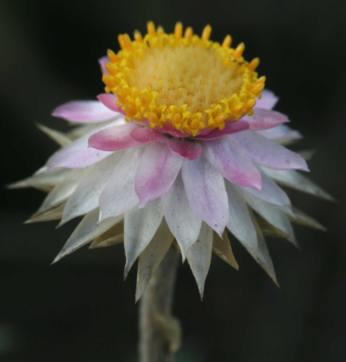
During the flowering period the bushes are topped by small but striking hemispherical flowerheads. The flowers are tiny and yellow, and are borne in rounded heads surrounded by dry, shiny, spreading pink bracts that become silvery with age. Each plant produces a fairly large number of flowerheads, forming an attractive display. The main flowering period appears to be early summer, but plants can be found in flower in April and other months.
Conservation Status
Status
This species is listed as Endangered (EN) according to the SANBI Red List of South African Plants. At the time of assessment, eight severely fragmented subpopulations were thought to remain, and these were in decline due to calcrete mining for cement production, urban expansion, and alien plant invasion. Exploitation as everlasting cut-flowers may also pose a threat in populations that are easily accessible.
Conservation through relocation is the focus of ongoing studies by E.E.Campbell and students at the Nelson Mandela Metropolitan University.
Distribution and habitat
Distribution description
Achyranthemum recurvatum occurs in low-lying areas, from sea level up to 200 m altitude, in the Bontveld of the Eastern Cape. This vegetation covers only 500 km² and consists of a mosaic of bushclumps and grassveld. Within the Bontveld, Achyranthemum recurvatum is confined to shallow calcareous sands on calcrete ridges.
The climate in this area is oceanic, with mild cool winters and warm summers, and some degree of humidity. The temperature range is small, and so the plant might not tolerate frost. In addition, in its natural habitat Achyranthemum recurvatum does not experience a dry season, as precipitation is distributed throughout the year. However, rainfall is greater and more frequent during the winter months.

Derivation of name and historical aspects
History
The genus name Achyranthemum means ‘chaff flower’, from the Greek achyron, meaning ‘chaff’ or ‘bran’, and anthos, meaning ‘flower’. The specific name, recurvata, refers to the leaves which are bent backwards (recurved).
Achyranthemum belongs to a tribe of the daisy family, known as Gnaphalieae, the everlastings or sewejaartjies in Afrikaans, meaning ‘little seven-years’, indicating that the flowers last for a long time, a name that is applied to many different species with dry papery bracts, which last well as dried ornamental cut-flowers.
Achyranthemum recurvatum was initially placed under the genus, Xeranthemum by Linnaeus the Younger in 1782, moved into Helichrysum by Willdenow in 1803, then into Gnaphalium by Schultz Bipontinus in 1845, then into Syncarpha in 1989 by Nordenstam. DNA studies by Bergh and Manning showed that 7 species in the Gnaphalieae, including this one, were only distantly related to Syncarpha, and they have now been placed under the new genus Achyranthemum.
Ecology
Ecology
Little is known of the ecological interactions of Achyranthemum recurvatum. The beautiful flowerheads are likely to play a role in attracting an animal pollinator, but no record exists of who or what this pollinator might be.
Achyranthemum seeds (called achenes or cypselae) are small and light, and bear a crown of feathery hairs called a pappus, which is likely to aid in wind dispersal.
Achyranthemum recurvatum is highly specialised on a unique soil type which consists of ancient marine sediments compacted to form soft calcrete. This habitat-specificity is likely to be one of the factors that limits its distribution range, confining it to small areas where this soil type is exposed.
Uses
Use
The flowerheads of Achyranthemum recurvatum are exceptionally attractive and are commonly used as ornamental cut-flowers by members of the public. Since the colourful parts of the flowerhead consist of dry, papery bracts, they make good everlasting displays together with dried grasses.
Growing Achyranthemum recurvatum
Grow
Achyranthemum recurvatum is likely to make an extremely attractive high groundcover or border in lime-rich areas or special calcareous-soil sections of the garden. Alternatively, it could be grown in pots containing a mixture of calcareous soil and peat.
Although it is not currently commonly cultivated, the propagation of Achyranthemum recurvatum has been investigated by Swart in 2006 in order to attempt ex situ conservation. Several propagation methods were successful, but the recommended propagation method is air-layering.
For air-layering a 5 mm section of bark was removed from two to five healthy stems of each individual. The section of the stem was then treated with rooting hormone suitable for softwood cuttings and covered with 50 ml of a 1:1 mixture of calcareous soil and coir secured to the stem with aluminium foil. After 4 weeks a 40% rooting success was recorded. Although this is a low percentage, a branch that did not root in air-layering can remain on the plant to attempt air-layering later, or to aid in additional growth of the mother plant. Air-layering is therefore less destructive and more sustainable than taking cuttings. This is an important fact to consider, as this is an endangered species.
For cuttings, rooting success was 50% after four weeks in the study by Swart. Cuttings of 100 mm length were taken from the stems of healthy plants. Leaves from the lower 20 mm of the cutting were removed and treated with rooting hormone suitable for softwood cuttings. Cuttings were placed in a 1:1 mixture of calcareous soil and coir. These cuttings were then placed in a humid environment, such as a misting tunnel, to promote rooting.
The plants can also be propagated from seed, although germination success is generally low (around 20%). Success is enhanced by sorting the seeds and choosing mature achenes (dark with a swollen appearance) harvested under dry conditions throughout winter. Seeds should be stored for several months to allow after-ripening, before attempting to germinate them.
References
- Bergh, N. & Manning, J. 2019. Achyranthemum N.G.Bergh, a new genus segregated from Syncarpha DC. (Asteraceae, Gnaphalieae). South African Journal of Botany. 125: 434–456.
- Berrington, W. & Victor, J.E. 2007. Achyranthemum recurvatum (L.f.) N.G.Bergh. National Assessment: Red List of South African Plants version 2024.1. Online. https://redlist.sanbi.org/species.php?species=15499-5.
- Plants of the World Online. Achyranthemum recurvatum (L.f.) N.G.Bergh. https://powo.science.kew.org/taxon/urn:lsid:ipni.org:names:77203310-1. Accessed 27/04/2026.
- Swart, P.A. 2006. Horticultural propagation of the threatened species, Syncarpha recurvata (L.f.) B.Nord. Unpublished MSc. thesis, Faculty of Science, Nelson Mandela Metropolitan University.
- Trinder-Smith, T.H. 2003. The Levyns Guide to the plant genera of the south western Cape. Bolus Herbarium, UCT, Red Roof Design CC, Cape Town
Credits
Nicola Bergh
Compton Herbarium, Kirstenbosch
February 2013
Updated by Alice Notten
April 2026
Acknowledgements: photos by G.A. Verboom
Plant Attributes:
Plant Type: Ground Cover, Shrub
SA Distribution: Eastern Cape
Soil type: Sandy, Loam
Flowering season: Late Summer
PH: Alkaline, Neutral
Flower colour: Pink, Cream
Aspect: Morning Sun (Semi Shade), Afternoon Sun (Semi Shade)
Gardening skill: Challenging
Special Features:
 Drought resistant
 Feature plant
Horticultural zones




Rate this article
Article well written and informative
Rate this plant
Is this an interesting plant?
Login to add your Comment
Back to topNot registered yet? Click here to register.