


Crassula macowaniana
Introduction
Crassula macowaniana is a much branched rounded succulent shrub to 1 m high with finger-like leaves and beautiful rounded inflorescences of white fragrant flowers. Widespread from the southwestern Namibia through Namaqualand in the Northern Cape to near Clanwillliam in the Western Cape. Easily grown from cuttings and grows well in containers.
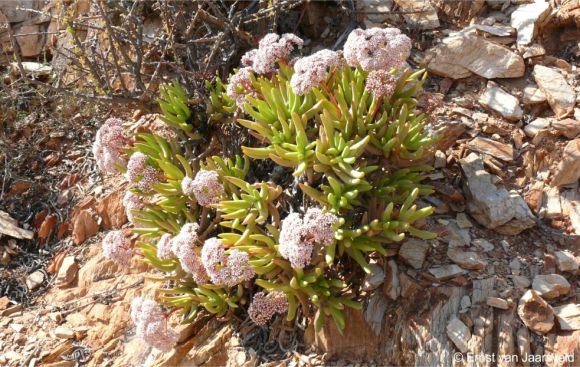
Fig. 1. A mature plant of Crassula macowaniana in flower at Helshoogte, Richtersveld Northern Cape.
Description
Description
Ascending evergreen rounded long-lived shrubs to about 1 m tall. The stems initially succulent, become woody at the base and main branches. The main stem up to 140 mm in diameter with rough, longitudinally fissured and flaking bark. The leaves succulent, in opposite pairs (decussate), sessile, clasping the stem, ascending spreading, linear lanceolate, 25–60 ´ 3–15 mm, flat above, convex below with a smooth surface, green, yellowish-green to brownish-green.
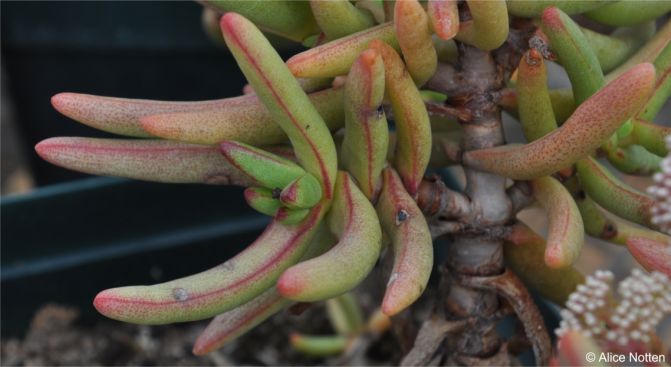
Fig. 2. Close-up of the leaves and stem of a cultivated Crassula macowaniana plant.
The inflorescence a rounded thyrse, with a reddish-brown peduncle 10-50 mm long. The calyx lobes oblong to semi-circular, up to 1 mm long. The flowers (corolla) are tubular and basally fused for 3-6 mm, white to light pink, the lobes 2.5 to 4 mm long, with rounded tips, spreading when open. The stamens with black anthers. Flowering is in spring to early summer (October to December).
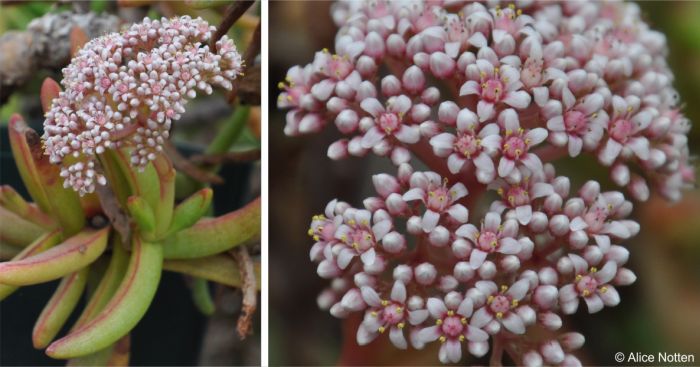
Fig. 3. Inflorescence and flowers of a cultivated Crassula macowaniana plant.
Plants in habitat vary in the shape and size of the leaves and in the size of the plant, with several local forms, one of which remains low growing even in cultivation, reaching about 200 mm high.
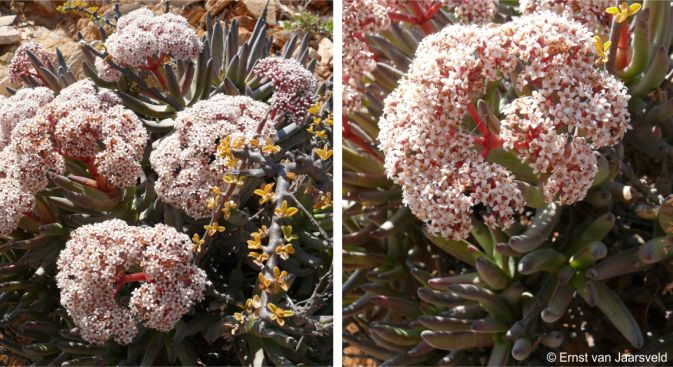
Fig. 4. LEFT Crassula macowaniana in flower at Helshoogte, Richtersveld, Northern Cape. RIGHT A close-up of the rounded inflorescence. Note the reddish flowering stems.
Conservation Status
Status
Plants are widespread and still common in its habitat. Classified as Least Concern (LC) by the Red List of South African Plants.
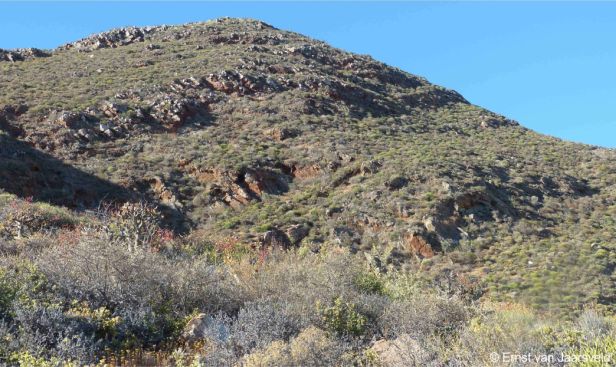
Fig. 5. The northern slopes of the Rooiberg near Nuwerus in the Western Cape, habitat of Crassula macowaniana.
Distribution and habitat
Distribution description
Crassula macowaniana is widely distributed from the northern parts of the Western Cape from just north of Clanwilliam, through Namaqualand in the Northern Cape to southwestern Namibia, occurring in the Succulent Karoo Biome from 500–1 200 m altitude. Crassula macowaniana grows on exposed rocky regions, sometimes steep rocky slopes and has been seen on granite, quarzitic sandstone, quartz, shale and schistose. The soil conists of gravel and sand. Temperatures are warm to very hot in summer and can reach 40°C. Winters are cooler but frost is light or absent. The average daily maximum temperature is 25–26°C and the average daily minimum for the region 9–10°C. Rainfall is mainly during winter (cyclonic) ranging from 75 to 250 mm per annum.
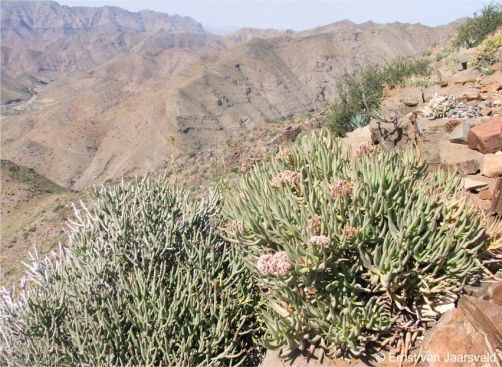
Fig. 6. Crassula macowaniana in flower on the Hunsberg, southern Namibia, growing with Euphorbia gummifera (left) as well as Boophone disticha and Prenia sladeniana in the background.
On the Vandersterrberg, central Richersveld, Northern Cape plants grow in succulent karoo and associated species include Trachyandra adamsonii, Kleinia cephalophora, Crassula sericea var. sericea, Euphorbia gregaria, Othonna cerarioides and Tylecodon paniculatus. On the Rooiberg, near Nuwerus, the plants grow on granite and quartz among Ottosonderia monticola, Tylecodon paniculatus, Cotyledon orbiculata, Jacobsenia kolbei, Stoeberia frutescens and Euphorbia mauritanica. On the Hunsberg in Namibia, plants grow on a granite hill together with Aloidendron dichotomum, Euphorbia gummifera, Cotyledon orbiculata, Tylecodon paniculatus, Boophone disticha, Prenia sladeniana and Stoeberia arborea.
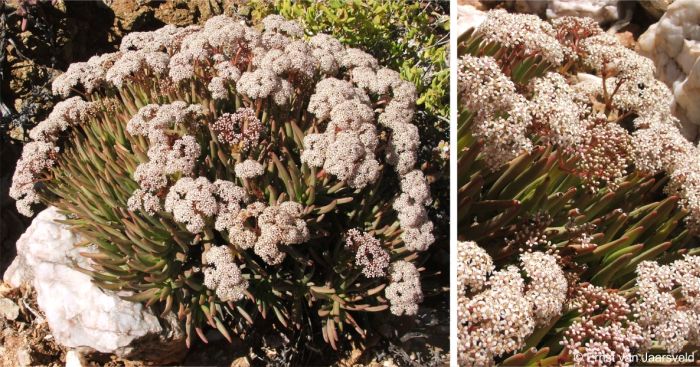
Fig. 7. Crassula macowaniana flowering in its native semi-desert habitat on slopes of the Vandersterrberg, Richtersveld, in the Northern Cape.
Derivation of name and historical aspects
History
Crassula macowaniana was named by the two botanists Selmar Schonland (1860–1940) and Edmund Baker (1864–1949) in the Journal of Botany (London) in 1899, from plants collected by William Scully (1855–1943) in Namaqualand. Scully, an Irishman, magistrate and collector of plants, emigrated to South Africa in 1867. Crassula macowaniana honours Peter MacOwan (1830–1909), botanist and teacher from Hull, England who settled in the Cape in 1861, and contributed to our knowledge of Cape Plants.
Crassula macowaniana belongs to section Perfilatae to which 7 species belong. These include: Crassula badspoortensis, C. fusca, C. perforata, C. sladenii, C. rupestris, C. brevifolia and the largest of them all C. macowaniana. Adrian Haworth, British succulent botanist, created this section 1828 to accommodate the species with woody stems, leaves with obvolute vernation, a pedunculate inflorescence and small tubular flowers. Species from section Perfilatae are popular among succulent enthusiasts due to the ornamental appeal of their leaves and their flowers.
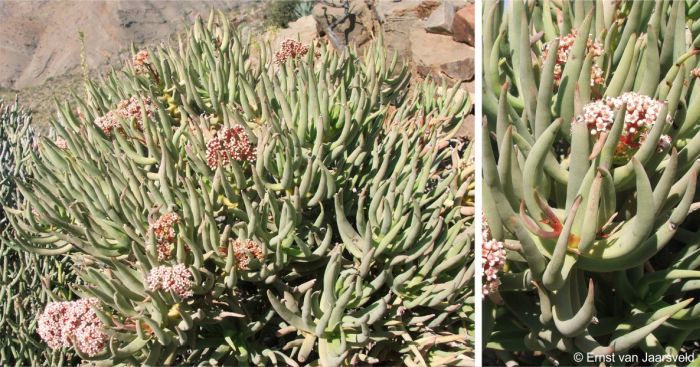
Fig. 8. Crassula macowaniana in flower on the Hunsberg, in southern Namibia. Note the leaf tips curving towards the north.
Ecology
Ecology
Crassula macowaniana grows on exposed rocky hillsides, the succulent leaves aid the plant during the dry summers. The leaves turn reddish brown during drought due to the pigment betanin which slows down the process of photosynthesis. The long linear ascending spreading leaves point their tips towards the sun, this regulates the sunlight penetration.
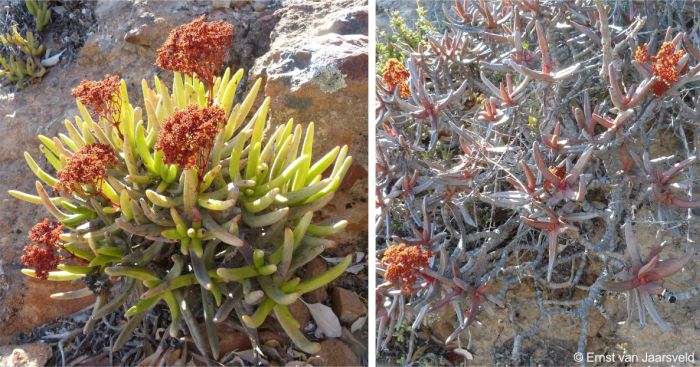
Fig. 9. Crassula macowaniana growing on the north-facing slopes of the Rooiberg near Nuwerus, Western Cape, in summer; LEFT A plant in fruit. RIGHT A plant with reddish pigment protecting the leaves during the dry summer months.
This a long-lived perennial shrub, the main stem and branches become woody with age. A dead plant of Crassula macowaniana on the Vanrhyns Pass was cut just above the roots and revealed at least 25 years of growth rings. The leaf epidermis is green to reddish green. The leaves are persistent, and long-lived, an adaptation to the xeric conditions. The inflorescence consists of a large round-topped thyrse, conspicuous during early summer, (October – December) attracting insects for pollination. The follicles are dehiscent, with seeds spontaneously released and dispersed by wind in summer and autumn.
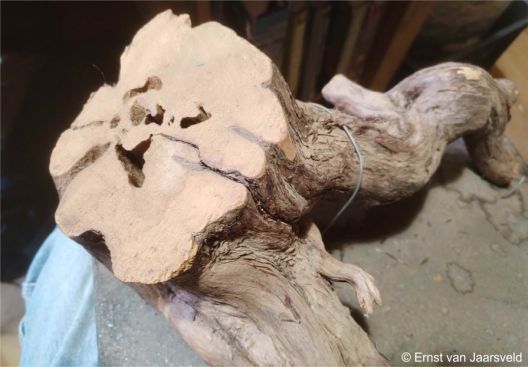
Fig. 10. The woody base of a dead Crassula macowaniana plant found on the Vanrhyns Pass, cut to reveal the annual growth rings counted at between 25 and 30 years.
Uses
Use
It is not known whether the plants are used medicinally.
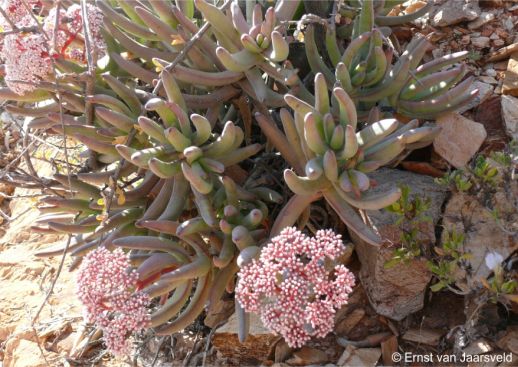
Fig. 11. Crassula macowaniana in flower at Helshoogte, Richterveld Northern Cape. Note the reddish flowering stems.
Growing Crassula macowaniana
Grow
Crassula macowaniana is a striking plant when in flower and is best for Succulent Karoo gardens, grown in rockeries, on embankments or as a pot plant. Due to its larger size, plant it as a backdrop. Outside its native habitat, it is best grown under controlled conditions in a greenhouse. Easily cultivated in well-drained soil and in it prefers full sun. Propagate from cuttings or seed.
Although Crassula macowanii is not well-known in cultivation, it is fairly easily grown and makes a beautiful potted plant. Soil should be sandy, slightly acidic and well-drained. Add ample amounts of well-rotted compost or feed with a liquid organic fertiliser. Water well, but allow plants to dry out for some time before watering again. Keep dry during summers. The stored moisture in their leaves and stems allow succulents to survive when no soil moisture is present.
Best propagated by cuttings in autumn, winter and spring. Plant cuttings of 6-10 cm length in a sandy soil mix.
Seed is fine and can be sown in a sandy mixture in autumn, cover with a very thin layer of gravel. Keep moist. Remove seedlings as soon they are large enough to handle.
The roots sometimes can be affected by mealybug, treat accordingly.
References
- Eggli, U. (ed.) 2003. Illustrated handbook of succulent plants: Crassulaceae. Springer, Berlin.
- Glen, H.F. & Germishuizen, G. (compilers). 2010. Botanical exploration of southern Africa, edition 2. Strelitzia 26. South African National Biodiversity Institute, Pretoria.
- Mucina, L. & Rutherford, M.C. (eds) 2006. The vegetation of South Africa, Lesotho and Swaziland. Strelitzia 19. South African National Biodiversity Institute, Pretoria.
- Raimondo, D., Von Staden, L., Foden, W., Victor, J.E., Helme, N.A., Turner, R.C., Kamundi, D.A. & Manyama, P.A. (eds) 2009. Red list of South African plants. Strelitzia 25. South African National Biodiversity Institute, Pretoria.
- Rowley, G. 2003. Crassula: a growers guide. Cactus & Co. Vista, California.
- Toelken, H.R. 1985. Crassulaceae. Flora of Southern Africa 14: 1–244.
Credits
Ernst van Jaarsveld
Kirstenbosch National Botanical Garden (Retired)
Babylonstoren Farm (Current)
Extraordinary senior lecturer and researcher,
Department of Biodiversity and Conservation, University of the Western Cape
May 2026
Plant Attributes:
Plant Type: Shrub, Succulent
SA Distribution: Northern Cape, Western Cape
Soil type: Sandy, Loam
Flowering season: Spring, Early Summer
PH: Acid, Neutral
Flower colour: White, Pink
Aspect: Full Sun
Gardening skill: Easy
Special Features:
 Drought resistant
 Feature plant
 Fragrant
 Good potplant
Horticultural zones



Rate this article
Article well written and informative
Rate this plant
Is this an interesting plant?
Login to add your Comment
Back to topNot registered yet? Click here to register.