


Haworthiopsis koelmaniorum var. mcmurtryi
Introduction
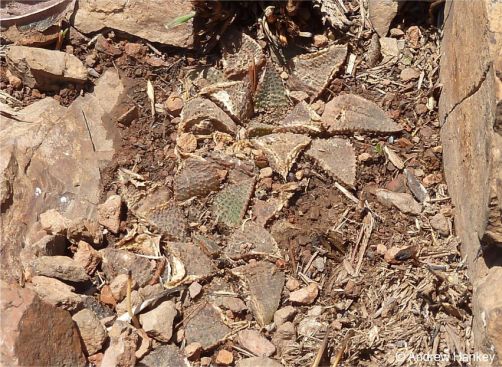
Haworthiopsis koelmaniorum var. mcmurtryi is one of the stemless, rosette-forming species of Haworthiopsis, with leaves that are tightly clustered around the central base, looking more like the petals of an open rose.
Description
Description
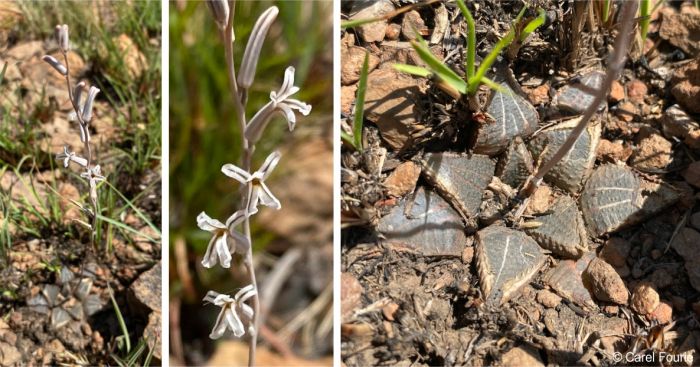
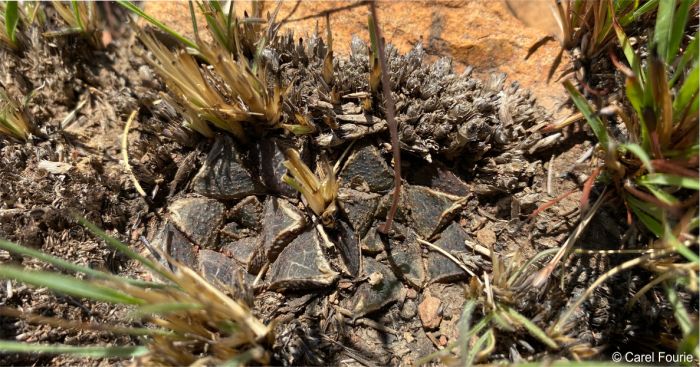
This variety of Haworthiopsis koelmaniorum forms a rosette that grows up to 70 mm in diameter. The leaves are dark brownish-green, recurved and about 20-40 mm long. They are also covered in many small bumps (tubercles) and the leaf margin as well as the keel have small teeth. A plant almost always produces a single flower stalk that grows up to 350 mm tall, forming a spike of about 10-15 white, slender flowers with greenish to brownish veins. The tepals of the flowers are rolled backwards. It flowers between spring and autumn.
Conservation Status
Status
The Mpumalanga Nature Reserve Act No. 10 of 1998 classified it as Vulnerable in 1998. The Red List of South African Plants has not assessed this subspecies but assesses the species as Vulnerable (VU). It occurs over a small area and its population is decreasing mainly because of illegal collecting for horticultural purposes, and also because farming, grazing and related activities cause some degradation and destruction of its habitat. The species was classified as Rare by Hall et al. in 1980.
Distribution and habitat
Distribution description
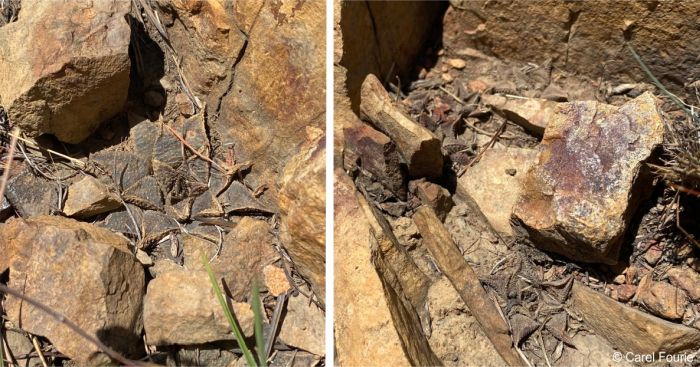
The distribution of Haworthiopsis koelmaniorum var. mcmurtry is strongly linked to soil and geological circumstances. It is limited to clay-based soils formed on the reddish rhyolite of the Selons River Formation, where it is mostly found on outcrops and rocky hillsides. Bosch describes rhyolite as a porphyritic-textured granular volcanic material. Glenrosa and Mispah soil varieties are currently recognized as the soils that accommodate all recognized populations.
This variety is found in a limited region located in Mpumalanga at an elevation of roughly 920 m above sea level. Its seemingly limited range could be partially attributed to inadequate plant studies. The area gets 400–600 mm of precipitation annually, mostly in the form of brief but severe storms throughout summer. Winters are marked by frequent frost, and summers are scorching. The landscape in the area is mostly grassland, with low scattered savanna and open shrubs scattered throughout.
The plants thrive in deep, well-drained, usually red sands that are connected to sloping hills of sand. Single plants are tightly packed into rocky fissures that hold small quantities of properly drained, humus-dense soil. Although individuals can be found in the slight shade of larger plants, they are typically located in open areas that receive full sunlight. With an average yearly temperature of roughly 21°C, this species enjoys a wide range of temperatures, from about −8°C in winter to 40°C in summer.
Derivation of name and historical aspects
History
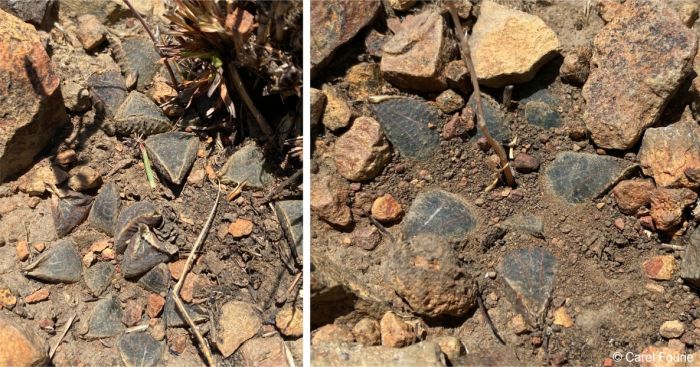
Douglas McMurtry made the discovery of this variety in 1983 on stony slopes southeast of the Loskop Dam in the province of Mpumalanga, South Africa. C.L. Scott first identified the type as a separate species, Haworthia mcmurtryi, and gave it an official description in 1984. M.B. Bayer recognized it as a smaller variant of Haworthia koelmaniorum in 1999. The species in question was classified under the genus Haworthiopsis by G.D. Rowley in 2013, after taxonomic studies split the genus Haworthia, and its officially recognized current name is Haworthiopsis koelmaniorum var. mcmurtryi.
The Koelman clan is honoured by the species name koelmaniorum, and Douglas McMurtry (1944- ), horticulturist, botanical scientist, first curator of the Johannesburg Botanical Garden and founder of the herbarium there, who made the discovery, is honoured by the variety designation mcmurtryi. The British botanist Adrian Hardy Haworth (1767–1833), who contributed significant improvements to the investigation and standardization of succulent species, is honoured with the name of the genus Haworthia. The genus name Haworthiopsis, means ‘like the genus Haworthia’.
There are several significant turning points in the taxonomic history of this species. Haworthiopsis koelmaniorum var. koelmaniorum, the typical variation, was initially found close to Groblersdal. Douglas McMurtry made the discovery of the variety mcmurtryi about twenty years later. Scott released his book The Genus Haworthia: A Taxonomic Revision in 1985, a significant contribution to the group's classification, after formally describing the taxon in 1984. Hayashi's 1999 proposal of a northward dispersion pathway for Haworthia via H. tesselata improved our knowledge of the range and evolutionary background of this genus. Haworthiopsis koelmaniorum is a member of the Asphodelaceae, a family that includes genera like Aloe, Gasteria, Haworthia and Haworthiopsis and is primarily composed of succulents and perennial flowering plants. Because of their unique water storage tissues, members belonging to this group are well suited to arid settings. The genus Haworthiopsis, made up of small, slow-growing succulents native to southern Africa, is characterized by its rough, tuberculate leaves and ability to thrive in rocky environments. There are two known variaties of H. koelmaniorum, var. mcmurtryi, which is limited to clay-based soils formed on rhyolite, and var. koelmaniorum, which is linked to sandy soils that are created from quartzite.
Ecology
Ecology
This variety is a relatively slow-growing succulent and it is well suited to the severe climate of the Mpumalanga Highveld. It survives in rocky and semi-arid habitats thanks to a number of modifications. Before the water evaporates or flows away, its shallow root system quickly absorbs water on the surface from brief summer rains. In order to defend themselves from herbivores, lessen their contact with frost, and establish a more secure environment, plants grow closely wedged between rock cracks. Furthermore, the dark brownish-green colour of the leaves effectively conceals them from grazing animals by resembling the nearby rocks and soil. This is known as cryptic colouring. For someone who does not know them, it might be difficult to spot them in their natural habitat.
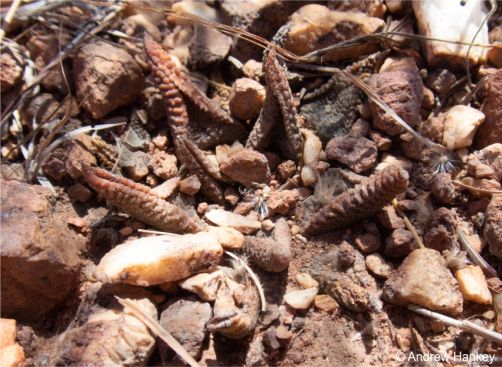
Its capacity to retreat nearly entirely beneath the soil surface during extended dry spells is an amazing seasonal adaptability. Only the tips of the leaves are visible above ground during these periods, which minimizes water loss through transpiration and keeps them cooler by reducing exposure to the sun, but also makes it very challenging to find the plants in the wild.
Additionally, the species shows adaptations to grassland habitats that are prone to fire. Plants can withstand numerous fire incidents because their developing points, or meristems, are situated at or below ground level and are shielded by overlapping leaf bases, and rocky outcrops offer some fire protection.It is also thought that the seeds have hard seed coats that can be scarified by heat, encouraging germination following a fire and supporting population renewal.
Mechanisms of seed dispersal are still not well understood, but it could be well dispersed by wind.
Uses
Use
Being a rare, endemic and protected succulent, this variety has relatively few recorded uses and little historical importance. However, instead of traditional cultural or therapeutic purposes, it is more subjected to scientific investigation, decorative gardening, and biodiversity protection. Haworthiopis limifolia, a relative of H. koelmaniorum is the one that is mostly used in traditional medicine.
Growing Haworthiopsis koelmaniorum var. mcmurtryi
Grow
This variety is a relatively slow-growing succulent that requires moderate maintenance and well-drained soil in sunny, well-ventilated environments to flourish. In addition to ensuring healthy development, proper growing techniques help preserve its unique beauty.
This species thrives in semi-shaded areas with indirect, bright light. Although it can withstand lower levels of light, brighter environments bring out the distinctive colour and roughness of its foliage. Windows that get sunlight that is filtered are suitable for growing it indoors. Due to its susceptibility to root rot, it is crucial that the growth medium must drain freely. High water retention is one of the biggest threats in cultivation.
Throughout the growing season, it enjoys warmer temperatures and hibernates in winter. It can withstand temperatures between roughly -1.1°C and 10°C and is hardy. Long-term contact with frost, however, ought to be prevented.
Depending on the plant's growth cycle, different amounts of water are needed throughout the year. When it is actively growing in spring and summer, give it a thorough soaking and let it dry out before watering it again. Growth starts to slow down from late autumn all the way though winter and watering should be drastically reduced or stopped during these periods.
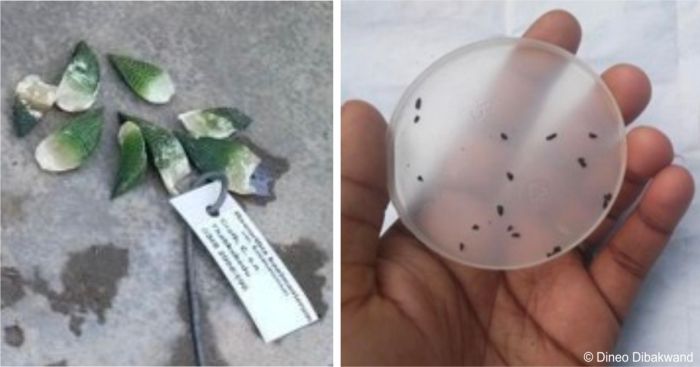
At Walter Sisulu National Botanical Garden, we propagate it by using both the seeds and the leaves. We sterilize the soil medium and all the tools that we will need. For soil sterilization, we mix bleach with water at a 1:100 ratio. The trays and containers are washed with soap and water, and then soaked in the sterilizing mixture for an hour and left to dry before propagating. Seedling trays and containers are filled with the growth medium and the sterilizing mixture is then watered thoroughly onto the seedling trays using a watering can, until the water drains out the bottom.
Seeds are sowed in spring. A 1:1 mixture of sieved potting soil and river sand is poured into a seedling tray, compacted and then the seeds are scattered over the surface and covered with about 1 cm of the same growth medium.
Seedling trays are filled with river sand and compacted so that the medium is evenly flat and the leaves will not move when being watered. When collecting the leaves, gently remove each leaf by hand from a healthy, disease-free mother plant. It is preferable to use the very bottom leaves as they are older, much better to handle and they root better compared to new leaves. Collecting botom leaves also prevents uncessary damage to the plant. Wash the leaves with soapy water to remove dust particles, allow them to dry before propagating, apply rooting hormone and sulphur to the bottom section of the leaf and then plant it in the soil medium.
References
- Biko’o, A.A., Du Plessis, D.G. & Myburgh, W.J. 2011. Population size, structure and habitat features of Haworthia koelmaniorum var. mcmurtryi, an endemic plant from Mpumalanga Province, South Africa. Koedoe 53(1):8.
- Bosch, P.J.A. 2004. The geological, pedological and climatic influence on variety generation in Haworthiopsis koelmaniorum var. mcmurtryi. Aloe. 41(2 & 3):56-60.
- Fourie, C. 2026. Observations of Haworthiopsis koelmaniorum var. mcmurtry, Nkangala, Mpumalanga. iNaturalist. Online. https://www.inaturalist.org/observations?taxon_id=599667&user_id=carelf.
- Gunn, M. & Codd, L.E. 1980. Botanical exploration of southern Africa. Balkema, Cape town.
- Hall, A.V., De Winter, M., De Winter, B. & Van Oosterhout, S.A.M. 1980. Threatened plants of southern Africa. South African National Scientific Programmes Report 45. CSIR, Pretoria.
- Hankey, A. 2023. Observation of Haworthiopsis koelmaniorum var. mcmurtry, Nkangala, Mpumalanga. iNaturalist. Online. https://www.inaturalist.org/observations/156381232.
- Hankey. 2014. Observation of Haworthiopsis koelmaniorum var. mcmurtry, Nkangala, Mpumalanga. iNaturalist. Online. https://www.inaturalist.org/observations/11064443.
- Scott, C.L. 1985. The genus Haworthia, a taxonomic revision. Aloe Books, Johannesburg.
- Von Staden, L., Lötter, M., Burrows, J.E. & Biko'o, A. 2014. Haworthiopsis koelmaniorum (Oberm. & D.S.Hardy) Boatwr. & J.C.Manning. National Assessment: Red List of South African Plants version 2024.1. Accessed on 2026/08/19
- World of Succulents, Succupedia. Haworthiopsis koelmaniorum var. mcmurtryi. https://worldofsucculents.com/haworthiopsis-koelmaniorum-mcmurtryi/. Accessed 27 July 2026.
- World of Succulents, Succupedia. How to Grow and Care for Haworthiopsis. How to Grow and Care for Haworthiopsis - World of Succulents. Accessed 27 July 2026.
Credits
Dineo Dibakwane and Khutatso Baloyi
Walter Sisulu National Botanical Garden
August 2026
Acknowledgements: the authors thank Carel Fourie and Andrew Hankey for allowing the use of their images to illustrate this article.
Plant Attributes:
Plant Type: Succulent
SA Distribution: Mpumalanga
Soil type: Clay, Loam
Flowering season: Spring, Early Summer, Late Summer, Autumn
PH: Acid
Flower colour: White
Aspect: Full Sun, Morning Sun (Semi Shade), Afternoon Sun (Semi Shade)
Gardening skill: Challenging
Special Features:
 Drought resistant
 Good potplant
Horticultural zones



Rate this article
Article well written and informative
Rate this plant
Is this an interesting plant?
Login to add your Comment
Back to topNot registered yet? Click here to register.