


Aloe boylei
Introduction
A standout grass aloe with broad, upright leaves dotted in white, topped by vibrant salmon-pink tubular flowers in summer. Well suited to marshy grassland gardens in full sun.
Description
Description
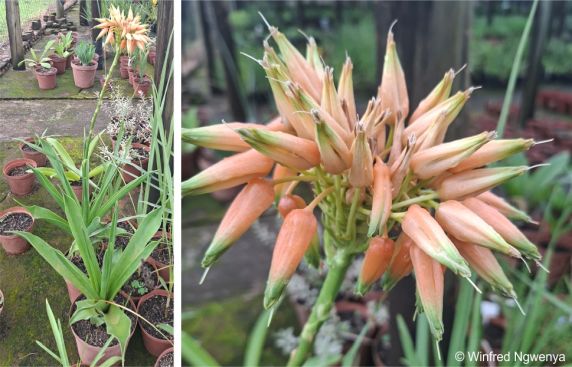
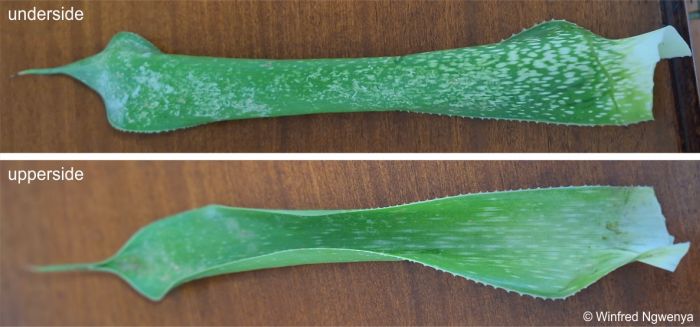
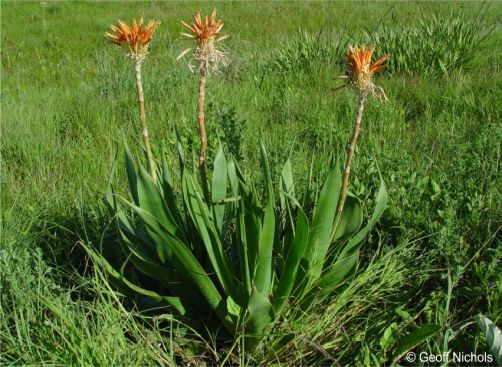
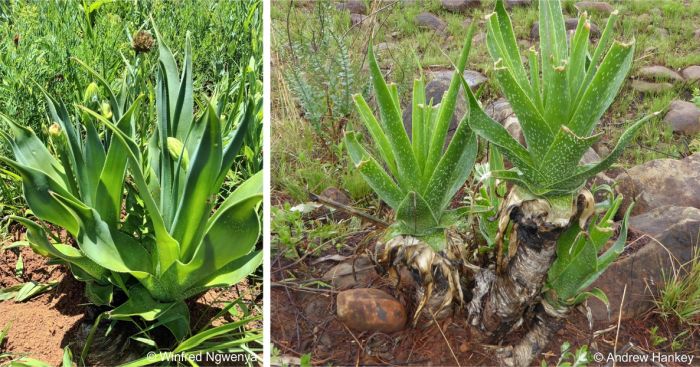
Aloe boylei is a hardy, perennial, deciduous succulent that grows about 500 mm in height and typically forms dense clumps. As the plant matures, it develops a short thick stem, below the old leaves. The leaves are thick, broad, and arranged in a dense rosette. They are green, upright, and slightly curved inward, the upper surface may have white spots, the lower surface has many white spots especially near the base. The leaf margins are finely toothed, bearing small, soft, whitish teeth evenly spaced along the edges. During the cooler winter months, the leaf margins may turn pinkish to reddish.
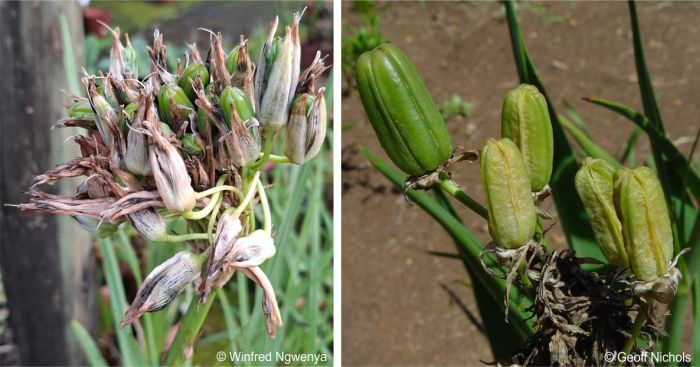
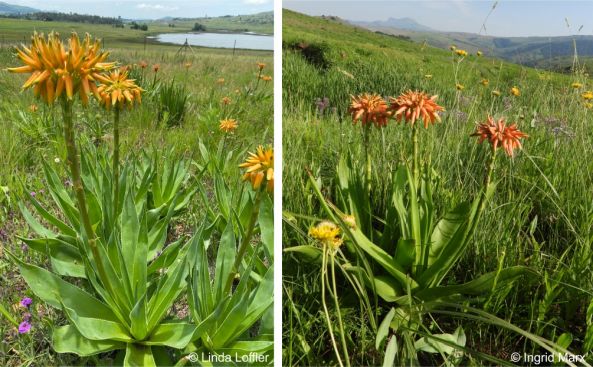
The plant produces striking orange to salmon-pink flowers, tipped with green. The flowers are tubular, tapering to the tip, and are borne in a dense flattish globose inflorescence, which is carried on a flower stalk reaching up to 500 mm, extending above the leaves. Flowering occurs in summer, from November to February. The outer surface of the flowers is smooth. Small, black, angular seeds are produced in green capsules, which dry out and split open upon maturity, typically in February.
Aloe boylei can easily be confused with Aloe ecklonis. However, Aloe boylei is distinguished by its broader, more erect green leaves with white spots, and salmon-orange flowers, whereas Aloe ecklonii also has broad leaves but they are usually more flatly spreading, dull green to blue-green, it has no stem, and its flowers are shorter, swollen in the middle, and usually in shades that range from yellow to orange.
Conservation Status
Status
According to the SANBI Red List of South African Plants, the conservation status of Aloe boylei is Least Concern (LC). This species is widespread and common, however, the population of Aloe boylei in the White River Nature Reserve has been declining rapidly due to illegal harvesting for unknown reasons.
Distribution and habitat
Distribution description
Aloe boylei grows in rocky mist belt grassland at altitudes ranging from 600 to 2 400 m. It occurs on moist grassy slopes, often in rocky crevices and on steep slopes, and in marshy areas, in full sun or partial shade. The species is distributed across the Eastern Cape, KwaZulu-Natal, Limpopo and Mpumalanga, and also occurs in north-western Eswatini. Aloe boylei is tolerant of both drought and frost. It requires moderate watering but is sensitive to waterlogged soils.
Derivation of name and historical aspects
History
The generic name Aloe is derived from the Arabic word al’uluh, meaning ‘bitter, shiny substance’. The specific epithet boylei honours F. Boyle, who sent the first plant material to the Royal Botanic Gardens, Kew, in England, where it was named by the botanist J.G. Baker in 1892.
Aloe boylei belongs to the family Asphodelaceae. The genus Aloe is large, comprising more than 650 species. Members of this family are characterised by fleshy leaves, often with spiny margins, and they produce capsule-type fruits. The genus is well known for its medicinal and cosmetic properties.
Ecology
Ecology
Most Aloe species thrive in well-drained, dry soils, often in rocky outcrops in grassland habitats. They produce attractive flowers that may be either long- or short-tubed. The majority of Aloe species are pollinated by birds, while a few are pollinated by insects such as honeybees. Aloe boylei is primarily pollinated by sunbirds, although the flowers attract a variety of pollinators, including bees and other insects, and other nectar-feeding birds. The small seeds, released from dry, split-open capsules, are dispersed by wind.
Uses
Use
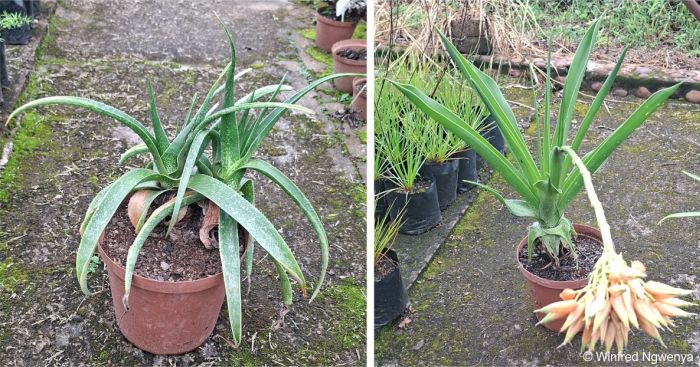
Aloe boylei is primarily valued as an ornamental species due to its attractive growth form, broad light green leaves with white spots, and tall flower stalks bearing tubular salmon-pink flowers. The species is well suited to rock gardens, grassland gardens, indigenous landscapes, and water-wise gardens, and it can also be grown successfully as a container plant.
Most aloes contain gel-like substances in their leaves that are commonly used to treat minor burns, wounds and skin irritations. The most well-known and widely documented for medicinal use are the species Aloe vera and Aloe ferox. Aloe boylei also contains gel-like substances in its leaves but it is not known to be used medicinally.
In some communities, the fibrous components of the plant are used for crafting ropes and other materials. The fleshy leaves can be cooked and eaten, and they store water, providing a source of moisture and nourishment for certain animals.
Growing Aloe boylei
Grow
Aloe boylei can be easily propagated by seeds or by division.
Collect seeds when the capsules are dry and begin to split open. Remove the seeds by hand and sow them in spring or summer, when temperatures are warm. Fill a seedling tray with a mixture of potting soil and washed river sand, level the surface, and scatter the seeds evenly. Cover the seeds lightly with a thin layer of the growth medium. Place the tray in a warm raised bed in a glasshouse or under shade netting. Water gently using a fine mist spray, keeping the soil slightly moist but not waterlogged. Germination typically occurs within four weeks. Transplant seedlings into individual pots when they reach 5–10 cm in height, keeping them under an 80% shade netting. Gradually expose the plants to full sunlight, reducing watering slightly to encourage strong root development.
The best time to propagate Aloe boylei by division is during its active growing season, in spring or early summer, as this allows the plant to recover quickly from the stress of separation. Carefully dig up a mature plant and separate the small offshoot from the main clump. Plant the offshoot in a mixture of potting soil and washed river sand in an individual pot or plant bag. Place under 80% shade netting and water lightly until established. Offshoots can be planted in the ground after two years.
Aloe boylei thrives in partly shaded locations with well-drained loamy soil. An organic fertilizer can be applied in summer to promote healthy growth. It is a fast-growing plant that can tolerate a few hours of direct sun, but excessive sunlight may stress the plant and burn the leaves. Water moderately, allowing the soil to dry out completely between watering. During the active growing season in spring and summer, water slightly more frequently, and reduce watering in autumn and winter when the plant is resting. Remove dead, damaged, or dry leaves in summer using sharp, clean pruning shears, cutting as close as possible to the base of the rosette.
Aloe boylei is suitable for mixed flower beds, where it can be used as a border plant at the edge of the bed, and it performs well in containers. It can be planted alongside species such as Callilepis laureola and Aloe simii.
Mealybugs and scale insects may attack Aloe boylei, but these pests can be effectively controlled with pesticides. Root rot is a common disease affecting succulents, including Aloe boylei, when overwatered; fungicides can manage this condition effectively.
References
- Guildford Cycads. Aloe boylei. https://www.guildfordcycads.com.au/aloe-boylei-boyles-aloe-south-african-endemic/. Accessed 10 March 2026.
- iNaturalist. Aloes. https://www.inaturalist.org/taxa/71956-Aloe/. Accessed 15 March 2026.
- Loffler, L. 2021. Observation of Aloe boylei, Hhohho Region, Eswatini. iNaturalist. Online. https://www.inaturalist.org/observations/102920800.
- Marx, I. 2024. Observation of Aloe boylei, KwaMandlangampisi Protected Environment, MP. iNaturalist. Online. https://www.inaturalist.org/observations/253189683.
- Mtshali, H. 2019. Aloe boylei Baker. National Assessment: Red List of South African Plants version 2024.1. https://redlist.sanbi.org/species.php?species=2206-4065
- Plant Delights Nursery, Inc. Aloe boylei. https://www.plantdelights.com/products/aloe-boylei. Accessed 15 March 2026.
- Plants of the World Online. Aloe boylei Baker. https://powo.science.kew.org/taxon/urn:lsid:ipni.org:names:529269-1. Accessed 8 April 2026.
- Pooley, E. 1998. A field guide to wild flowers of Kwazulu-Natal and the eastern region. Natal Flora Publications Trust, Durban.
- Random Harvest. Aloe boylei. https://www.randomharvest.co.za/South-African-Indigenous-Plants/Show-Plant/PlantId/712/Plant/Aloe-boylei. Accessed 02 March 2026.
- Reynolds, G.W. 1982. The Aloes of South Africa. A.A.Balkema, Cape Town.
- Seeds and All. Aloe boylei. https://seedsandall.co.za/product/aloe-boylei-broad-leaved-grass-aloe-5-seed-pack/. Accessed 10 March 2026.
- Van Wyk, B.-E., Van Oudtshoorn, B. & Gericke, N. 2009. Medicinal plants of South Africa, edn 2. Briza Publications, Pretoria.
- Van Wyk, B-E. & Smith, G. 1996. Guide to aloes of South Africa. Briza Publications, Pretoria.an
- Wentzel, J. n.d. Aloe boylei. Wildflower Nursery. Online. https://wildflowernursery.co.za/indigenous-plant-database/aloe-boylei/. Accessed 05 March 2026.
Credits
Winfred Ngwenya
Lowveld National Botanical Garden
April 2026
Acknowledgements: images of Aloe boylei in habitat by Andrew Hankey, Geoff Nichols, Ingrid Marx and Linda Loffler.
Plant Attributes:
Plant Type: Succulent
SA Distribution: Eastern Cape, KwaZulu-Natal, Limpopo, Mpumalanga
Soil type: Sandy, Loam
Flowering season: Early Summer, Late Summer
PH: Acid, Neutral
Flower colour: Green, Pink, Orange
Aspect: Full Sun
Gardening skill: Easy
Special Features:
 Attracts birds
 Drought resistant
 Feature plant
 Good potplant
 Edible plant
 Feeds honeybees
Horticultural zones




Rate this article
Article well written and informative
Rate this plant
Is this an interesting plant?
Login to add your Comment
Back to topNot registered yet? Click here to register.