


Crassula montana subsp. borealis
Introduction
Crassula montana subsp. borealis is a densely dividing, mat-forming, cliff-hugging plant with distinctly mottled and shallowly pitted leaves in tight cup-shaped rosettes, and a spike-like, elongated inflorescence of small, tubular, pinkish flowers, in midsummer. It occurs in northern Namaqualand and the Richtersveld. Grows well in containers in dappled shade.
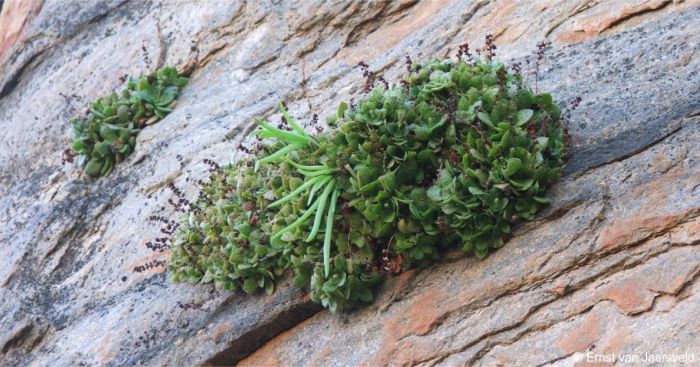
Fig. 1. Crassula montana subsp. borealis in its south-facing quarzitic sandstone cliff-face habitat at the southern end of the Skaaprivierspoort in Namaqualand, pictured here after rainfall and sharing its habitat with Bulbine pendens.
Description
Description
Perennial succulents with cluster-forming, compact, cup-shaped rosettes, when in flower up to 80 mm tall and the rosettes 25 mm diam. The plants have basal stolons, and form mats that are slightly rounded, up to 300 mm in diameter and can consist of more than a 100 heads. Roots fibrous. The leaves are spirally arranged or sub-opposite (rarely four ranked), adpressed to each other, oblanceolate to broadly egg-shaped, 12–25 (–30) × 10–15 mm; upper surface flat to becoming slightly channelled during the dry season; the surface moderately shallowly pitted (foveate), the depressions reddish purple; lower surface convex, green becoming reddish purple; margins with short, white recurved cilia. The inflorescence a terminal, elongate spike-like thyrse, 30–80 mm high, with several dichasia and sessile flowers. Peduncle 15–20 mm long, glabrous with up to 2 pairs of leaf-like, triangular-ovate bracts, lower 5–7 × 2.5 –3.5 mm, the apices acute, minutely ciliate. The calyx 2.5 mm long, sepals triangular-lanceolate, glabrous with marginal cilia. Corolla tubular, about 3 mm long and 2 mm in diameter, fused basally; petals ovate-lanceolate, 3 × 1.2 mm, ascending, pinkish white. Flowering time is in midsummer, December to January.
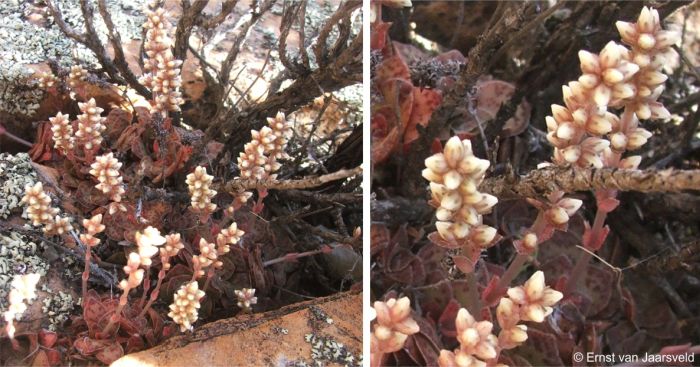
Fig. 2. Crassula montana subsp. borealis in full flower on the upper south-facing, mineral-poor quarzitic sandstone cliff on the Rosyntiesberg during the dry midsummer.
Conservation Status
Status
Crassula montana subsp. borealis has not yet been assessed by the Red List of South African Plants but on the current knowledge of this species it should be regarded as Rare as it is only known from two sites. It is well protected by its often inaccessible cliff-face habitat.
Distribution and habitat
Distribution description
Only known as yet from two sites, the upper south-facing cliffs of the Rosyntjiesberg in the Richtersveld and the Skaaprivierspoort in northern Namaqualand. Atboth of these places, C. montana subsp. borealis grows on the upper south-facing cliffs, on mineral-poor quarzitic sandstone cliffs. Both sites are also subject to coastal fog, on which the vegetation is partially dependent for moisture.
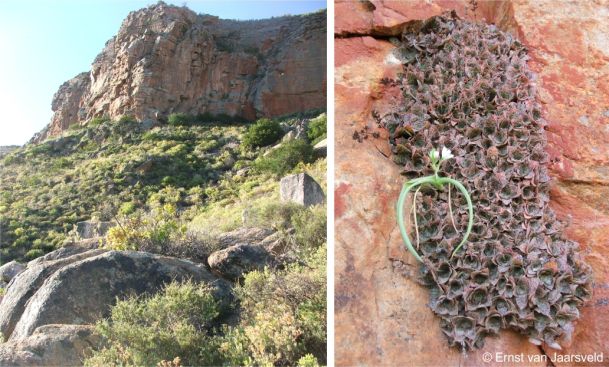
Fig. 3. Left: The upper cliffs at the southern end of the Skaaprivierspoort in Namaqualand, Northern Cape, habitat of Crassula montana subsp. borealis. Right: Plants growing in a crevice on the cliff face of the upper part of the mountain, which receives frequent fog.
The southern site, includes the western edge of the interior plateau northeast of Springbok, which is deeply dissected by the Skaaprivierspoort. The Skaaprivier is a tributary of the Buffelsrivier and forms a deep a gorge. This escarpment is rich in succulent plant species. The vegetation here is known as Namaqualand Blomveld. Crassula montana subsp. borealis grows in crevices hugging the upper south-facing shady cliff face and has been observed growing together with other cliff-dwelling plants such as Bulbine pendens, Colpias mollis, Tylecodon petrophilus, Albuca gildenhuysii, Cynanchum viminale and Drimia convallarioides (= Rhadamanthus montanus), at an altitude of about 500-700 m above sea level.
The northern site at Rosyntjiesberg is situated in the northeastern corner of the Richtersveld, on the Namibian border, and is also rich in succulent plant species. Here Crassula montana subsp. borealis also grows as a cliff hugger on the upper south-facing cliff face. The vegetation consists of Rosyntjiesberg Succulent Shrubland (Richtersveld Bioregion). Plants grow in dense cliff-hugging mats at an altitude between 800 and 900 m above sea level. Associated cliff-dwellers include Aloe meyeri, Bulbine pendens, Conophytum taylorianum subsp. rosynense, Crassula sericea var. sericea, Cyrtanthus herrei, Othonna cremnophila, Drimia convallarioides (= Rhadamanthus montanus), Stoeberia arborea and Tylecodon racemosus. Ficus ilicina, a rock-hugging evergreen shrub, was also encountered.
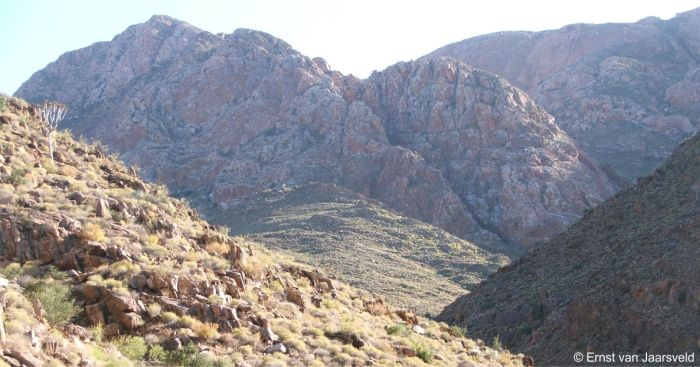
Fig. 4. The upper cliffs along the Rosyntjiesberg, which is part of the Richtersveld National Park in the Northern Cape, habitat of Crassula montana subsp. borealis. The upper cliffs are subject to fog, the moisture lifeline that so many plants depend on.
Derivation of name and historical aspects
History
Crassula montana subsp. borealis was named by the author in 2015 in Haseltonia, the succulent magazine of the American Cactus and Succulent Society, from plants collected by the author and his team in October 2008 on an expedition to Namaqualand and the Richtersveld, exploring the cliffs of the Rosyntjiesberg (Richtersveld) as well as the Skaaprivierspoort west of Springbok. A small, cliff-hugging Crassula with small cup-shaped rosettes was collected. Its relationship to C. montana became apparent when the plants were grown on in the Kirstenbosch National Botanical Garden succulent collection, where its growth and behaviour could be studied. When it came into flower a description was drawn up, and it was illustrated by botanical artist Gillian Forster. The species name borealis was chosen because it is the Latin for north, and C. montana subsp. borealis represents the northernmost distribution of Crassula montana. Why is it a subspecies and not a variety? A subspecies usually grows removed from the typical plant, in this case Crassula montana subsp. montana. It is also significantly distinct with clear morphological boundaries. There is not a continuation of its distribution grading into subsp. montana. If there was a gradual change it would have been better to make it a variety. There is a distribution gap between the Vanrhynsdorp district where subsp. montana occurs, and the Skaaprivierspoort and Rosyntjieberg. Also the plants of C. montana subsp. borealis from both sites, although disjunt in their northern distribution, are remarkably similar.
Crassula montana subsp. borealis can be distinguished by its pitted and narrower leaves, separating it from the other two subspecies; subsp. montana and subsp. quadrangularis. Furthermore, it flowers in midsummer, whereas subsp. montana and subsp. quadrangularis flower in spring. It can also be confused with C. pseudhemisphaerica but the latter can be distinguished by its leaves arranged in dome-shaped or flattish rosettes and it also flowers in spring (September to November).
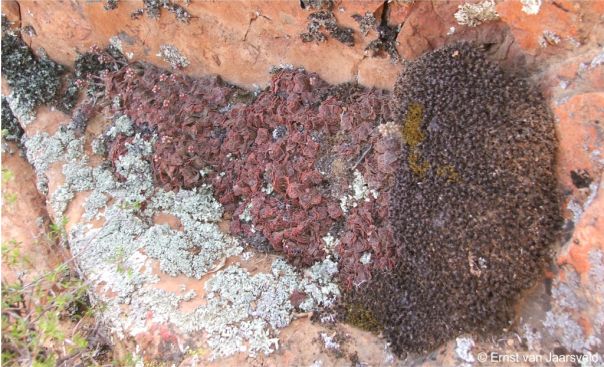
Fig. 5. A large group of Crassula montana subsp. borealis growing on the mineral poor quarzitic sandstone upper cliff face on the Rosyntjiesberg during the dry summer months. Note the inflorescences on the furthest plants.
Ecology
Ecology
The succulent leaves enable the plants to cope during the dry season. The leaves turn reddish during the dry season. This reddish colour is a result of anthocyanin production during dry and sunny conditions. The plant has a winter-growing cycle.
Like the other two subspecies, it grows in cliff-hugging mats on sheltered south-facing cliffs, filling crevices in the absence of disturbances by larger herbivores, and with little competition from other plants. The leaves grow spreading, in open cup-shaped rosettes. The soft-leaved plant bodies are without conspicuous armament.
Plants are long-lived perennials and grow in an area subject to fog from the coast, which benefits the plants. Flowering occurs in summer, and pollination is effected by insects. The fruits (follicles) are dehiscent, with seeds spontaneously released and dispersed by wind. The seed is minute and ideal for establishment in crevices. Seeds are released in autumn and are widely spread by thermals at the onset of thunder showers, and winter rainfall maximises establishment.
Plants proliferate, forming dense cushions, a vegetative backup strategy enabling the plants to survive the harsh conditions on the cliff face.
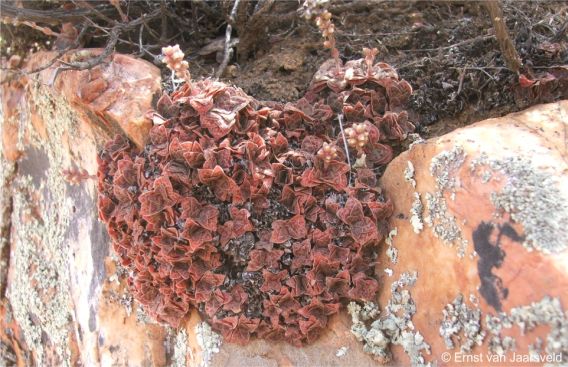
Fig. 6. Crassula montana subsp. borealis growing on the mineral-poor quarzitic sandstone upper cliff face on the Rosyntjiesberg during the dry summer months. Note the inflorescences and red colouration of the leaves.
Uses
Use
It is not known whether the plants are used medicinally. Crassula montana subsp. borealis is easily cultivated and makes a rewarding container plant.
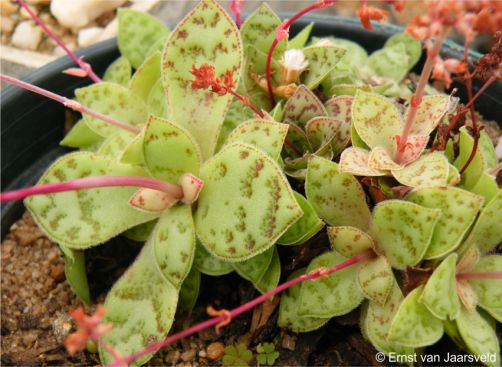
Fig. 7. Crassula montana subsp. borealis in cultivation in the succulent collection at Kirstenbosch National Botanical Garden, Cape Town.
Growing Crassula montana subsp. borealis
Grow
Crassula montana subsp. borealis is easily cultivated, its vigour maximises survival on the cliff and makes it a rewarding pot plant. Outside its habitat, it is best grown under controlled conditions in a greenhouse. Best for small containers, miniature succulent gardens and windowsills where there is no competition from larger non-succulent plants. The substrate should be sandy and well drained. The plant does best in dappled shade. Avoid full sun. Keep dry during the summer months, and provide water in autumn, winter and spring. Apply an organic liquid fertiliser when necessary.
Propagate by division or seed. Sow seed in a sandy gravely mixture in the autumn and keep in a shady position. Germination is rapid and once the seedlings are large enough to handle, prick them out into larger containers.
Mealy bug can be a problem and occasionally white scale.
References
- Eggli, U. (ed.) 2003. Illustrated handbook of succulent plants: Crassulaceae. Springer, Berlin.
- Mucina, L. & Rutherford, M.C. (eds) 2006. The vegetation of South Africa, Lesotho and Swaziland. Strelitzia 19. South African National Biodiversity Institute, Pretoria.
- Raimondo, D., Von Staden, L., Foden, W., Victor, J.E., Helme, N.A., Turner, R.C., Kamundi, D.A. & Manyama, P.A. (eds) 2009. Red list of South African plants. Strelitzia 25. South African National Biodiversity Institute, Pretoria.
- Rowley, G. 2003. Crassula: a growers guide. Cactus & Co. Vista, California.
- Thunberg, C.P. 1778 Crassula montana. Nova acta physico-medica Academiae Caesareae Leopoldino-Carolinae Naturae Curiosum 6: 329, 332.
- Toelken, H.R. 1985. Crassulaceae. Flora of Southern Africa 14: 1–244.
- Van Jaarsveld, E.J. 2015. Crassula montana subsp. borealis, a new cliff-dwelling species from Namaqualand, Northern Cape, Republic of South Africa. Haseltonia 21:97-101.
Credits
Ernst van Jaarsveld
Kirstenbosch National Botanical Garden (Retired)
Babylonstoren Farm (Current)
Extraordinary senior lecturer and researcher,
Department of Biodiversity and Conservation, University of the Western Cape
February 2026
Plant Attributes:
Plant Type: Succulent
SA Distribution: Northern Cape
Soil type: Sandy
Flowering season: Early Summer
PH: Acid
Flower colour: White
Aspect: Shade, Morning Sun (Semi Shade)
Gardening skill: Average
Special Features:
 Drought resistant
 Good potplant
 Indoor plant
Horticultural zones



Rate this article
Article well written and informative
Rate this plant
Is this an interesting plant?
Login to add your Comment
Back to topNot registered yet? Click here to register.